
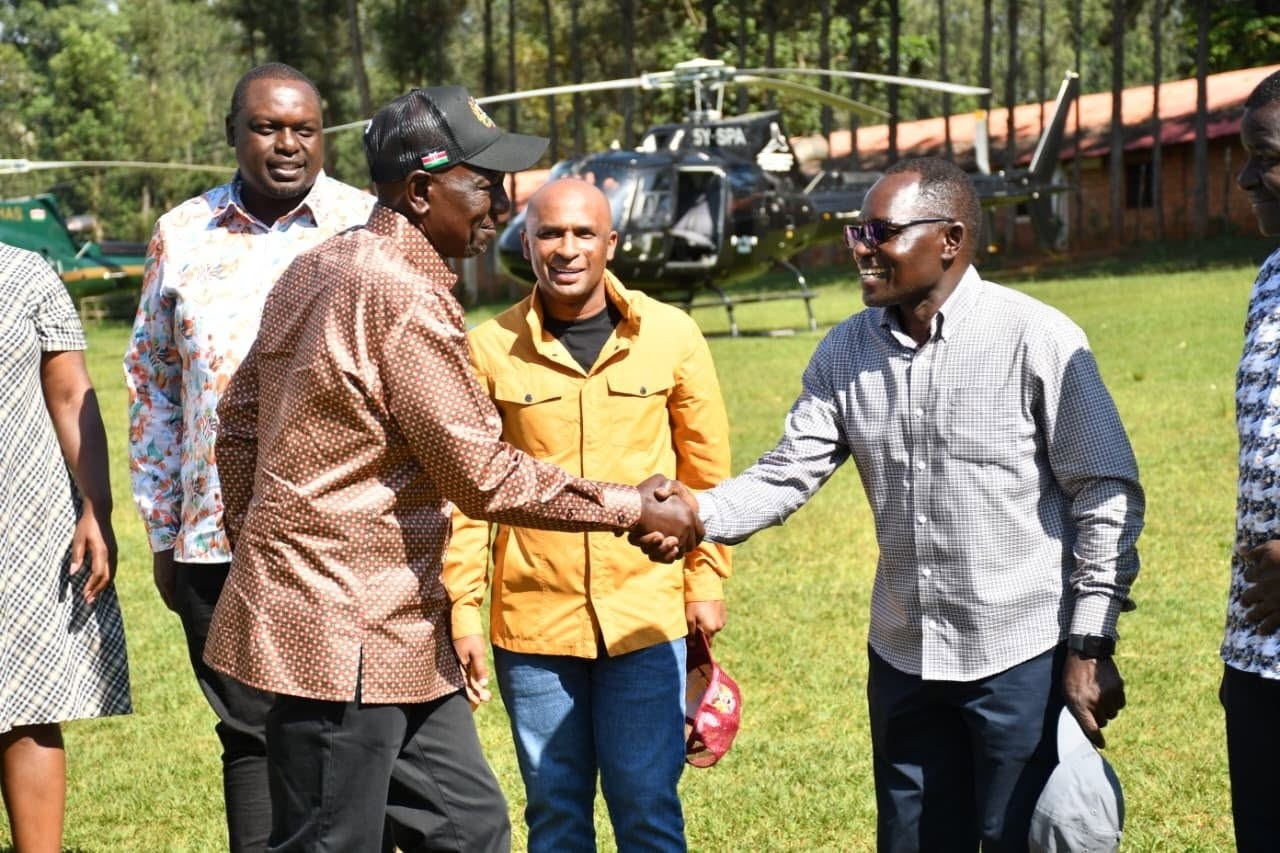
Government Steps Up Development Drive Across Gusii Region
President William Ruto’s four-day development tour of the Gusii region has reinforced the Government’s commitment to equitable development, with major investments in roads, electricity, education, affordable housing, markets, sports and digital infrastructure across Kisii and Nyamira counties.
In Kisii County, the tour saw the launch and inspection of projects aimed at improving public services, strengthening local economies and expanding opportunities for households, businesses and young people.
Principal Secretary for Broadcasting and Telecommunications Stephen Isaboke joined the President and other national and county leaders during the engagements, which formed part of the Government’s wider Bottom-Up Economic Transformation Agenda (BETA).
The President’s engagements in Kisii began in Bomachoge Chache, where he inspected the KSh616 million Ogembo Affordable Housing Project, which was 50 per cent complete, and launched the Ogembo Town Roads project. He also launched a Last Mile Electricity Connectivity Project targeting 290 households in Boochi Tendere village, as part of a KSh140 million investment to connect 1,700 households across the constituency.
In Bomachoge Borabu, the President commissioned Tongeri Industrial Park and flagged off the Last Mile Electricity Connectivity Programme, initiatives expected to stimulate local enterprise, attract investment, create jobs and extend access to electricity.
The tour also placed emphasis on education and youth development. In Bonchari, the President commissioned Nyankororo Primary School, comprising 12 new classrooms constructed with support from Safaricom. The school is expected to admit its first learners in January 2027, with the Government set to deploy 12 teachers. He also launched construction of the 22-kilometre Kenyoro SDA–Riana Market–Kerina Road to improve access and movement of agricultural produce.
In Bobasi, the President commissioned the KSh70 million Motonto Modern Market at Kabosi. The facility will accommodate more than 300 traders and includes cold storage, an ICT hub, food courts, a breastfeeding room and a children's play area. He also launched construction of the Nyagesa–Rianyamanga Road and flagged off electricity connections backed by KSh95 million to reach 1,600 households across the constituency.
Further road projects were launched in South Mugirango, including the Sengenya–Openda–Kiagware and Nyakeyo–Nyamasege roads. In Kitutu Chache North, the President launched electricity connectivity at Egogi, targeting 180 households, as part of a wider KSh380 million investment to connect 4,800 homes across the constituency.
The final day saw the launch of additional Last Mile Electricity Connectivity projects at Keroka in Nyaribari Masaba and Ibeno in Kitutu Chache, targeting 3,000 and 1,200 households respectively. The connections are expected to improve access to essential services and support household and business productivity.
Beyond the individual projects, the Government outlined a KSh22 billion development programme for Kisii County, covering 15,000 affordable housing units, 22 modern markets, student hostels and 270 kilometres of roads. A further KSh1.7 billion is earmarked to connect 25,000 households to electricity across the county.
The President also reaffirmed the Government’s commitment to improving returns for farmers through reforms in the coffee, tea and sugar sectors, including the modernisation of tea factories to improve efficiency and reduce production costs.
In Nyamira County, the tour had earlier featured the launch of the West Mugirango Digital Hub, equipped with 30 desktop computers and internet connectivity, as well as road, stadium and electricity projects. The President also inspected the Manga Affordable Housing Project, with the Government outlining investments in housing, modern markets and student hostels across the county.
The projects reflect a broad development agenda focused on bringing essential infrastructure and economic opportunities closer to communities. From improved roads and electricity access to better learning facilities, modern markets and digital connectivity, the investments are intended to translate Government commitments into tangible improvements in the lives and livelihoods of residents.